


Introduction
The beauty clinic business in Thailand continues to grow steadily with no signs of slowing down. Modern consumers' demands cover skin care, anti-aging, facial reshaping, and body contouring. This makes modern beauty clinics not just skin care centers, but comprehensive health and beauty businesses that meet diverse needs.
However, the hard truth is that many newly opened beauty clinics close down within their first 2 years. The main reason is not a lack of medical expertise, but a lack of comprehensive planning—spanning legal regulations, finance, device selection, and marketing.
This article compiles 10 essential steps that Inspire Eternity, as a medical beauty device importer and distributor working with clinics nationwide for over 15 years, has observed successful clinics do differently. We have compiled them into a single roadmap for you.
Why Now is a Great Opportunity to Open a Beauty Clinic
Thailand's medical beauty market continues to grow steadily. The aesthetic medicine market in Thailand was estimated at approximately USD 1.46 billion in 2023 and is projected to grow at a CAGR of about 11–14% annually until 2030.*
Several factors drive this growth simultaneously:
- First, Thai consumers prioritize self-care in a broader sense. It's not just about facial skin and anti-aging, but also body contouring, fat reduction, and non-surgical body shaping. Data shows that Body Contouring Devices are one of the fastest-growing segments in Thailand's beauty device market.**
- Second, medical beauty technology has evolved. Many treatments that once required surgery or long recovery times have shifted to non-invasive, quick procedures, making new consumer groups feel more confident to seek services.
- Third, Thailand is internationally recognized as one of Asia's top medical tourism destinations for beauty,*** boosting demand for well-positioned clinics.
Before Opening: Choose the Right Business Model
Not everyone starts from the same point. Three common business models for beauty clinics require different investment budgets, expertise, and payback periods:
| Model | Suitable For | Initial Investment | Payback Period |
|---|---|---|---|
| Doctor-owned clinic | Licensed medical practitioners | 1.5 – 5 Million Baht | 18 – 36 Months |
| Investor + Doctor partner | Business investors partnering with doctors | 3 – 8 Million Baht | 24 – 48 Months |
| Clinic Franchise | Those wanting a ready-made system and brand | 2 – 6 Million Baht | 24 – 36 Months |
* Figures are estimates for small to medium clinics, depending on location, space, and selected devices.
10 Steps to Open a Beauty Clinic Legally and Profitably
Step 1 — Study Healthcare Regulations and Apply for a Licensing (HSS)
This is a step many overlook or assume they can do later. The truth is, if you design and decorate before checking requirements, there's a high chance you'll have to modify the structure later, wasting time and budget.
The main law to understand is the Sanatorium Act B.E. 2541 (1998) and related ministerial regulations, which define physical, personnel, and operational standards.
The issuing agency is the Department of Health Service Support (HSS). You must obtain two main licenses: a license to operate a sanatorium and a license to manage a sanatorium, before opening.
Basic documents to prepare include floor plans, list of medical equipment, doctor's license, and rental agreement. The average process takes 2–4 months from submitting complete documents, depending on document completeness and local officer discretion.
Step 2 — Select Location and Design Space to Meet Standards
A suitable location doesn't have to be the busiest area, but must be easily accessible for your target group. Parking and public transit access are often underestimated by new clinic owners.
According to HSS requirements, a medical clinic offering beauty services must have an area of at least 60 square meters, a separate consultation room from the reception, proper ventilation and lighting, and a proper infectious waste management system. Clinics with laser rooms must include specific designs like laser light blocking and notification systems when in use.
Step 3 — Plan Budget and Investment Structure
The most common mistake is underestimating the budget, especially for medical devices and launch marketing.
The general budget structure for a medium-sized clinic (80–120 sq.m.) is as follows:
| Expense Category | Budget Proportion (Approximate) |
|---|---|
| Interior Decoration & Renovation | 20–30% |
| Medical Devices & Equipment | 35–45% |
| Pre-opening Expenses (Licenses, Insurance, etc.) | 5–10% |
| Working Capital for first 3 months | 15–20% |
| Launch Marketing | 10–15% |
* Proportions are estimates and may vary by location and offered treatments.
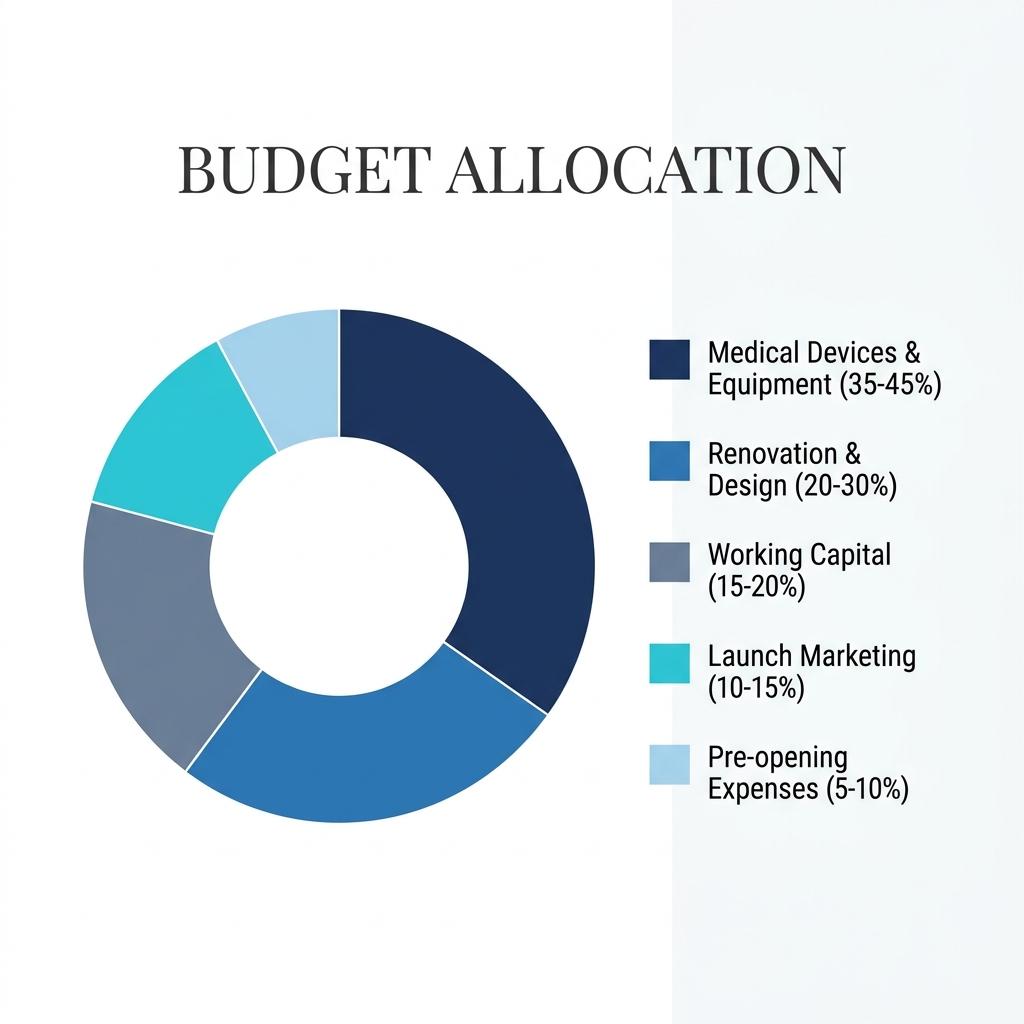
It is crucial to reserve working capital for at least 3 months because early revenue is often unstable, and cash flow shortage is a major reason new clinics close early.
Step 4 — Select Medical Devices to Match Target Customers
Selecting beauty medical devices has the longest-term impact on a clinic because each device has a different lifespan, cost, and treatment capability. Devices that new clinics prioritize include:
- Laser Machines — For highly demanded, consistent treatments like hair removal, melasma treatment, and skin toning. They build recurring revenue well.
- HIFU Machines (High-Intensity Focused Ultrasound) — For skin tightening and anti-aging treatments, popular with clients aged 35 and up.
- IPL Machines (Intense Pulsed Light) — Versatile for hair removal, skin toning, and general rejuvenation, offering high treatment flexibility.
- Fat Reduction & Body Contouring Machines — Meeting the growing demand for non-surgical body shaping.
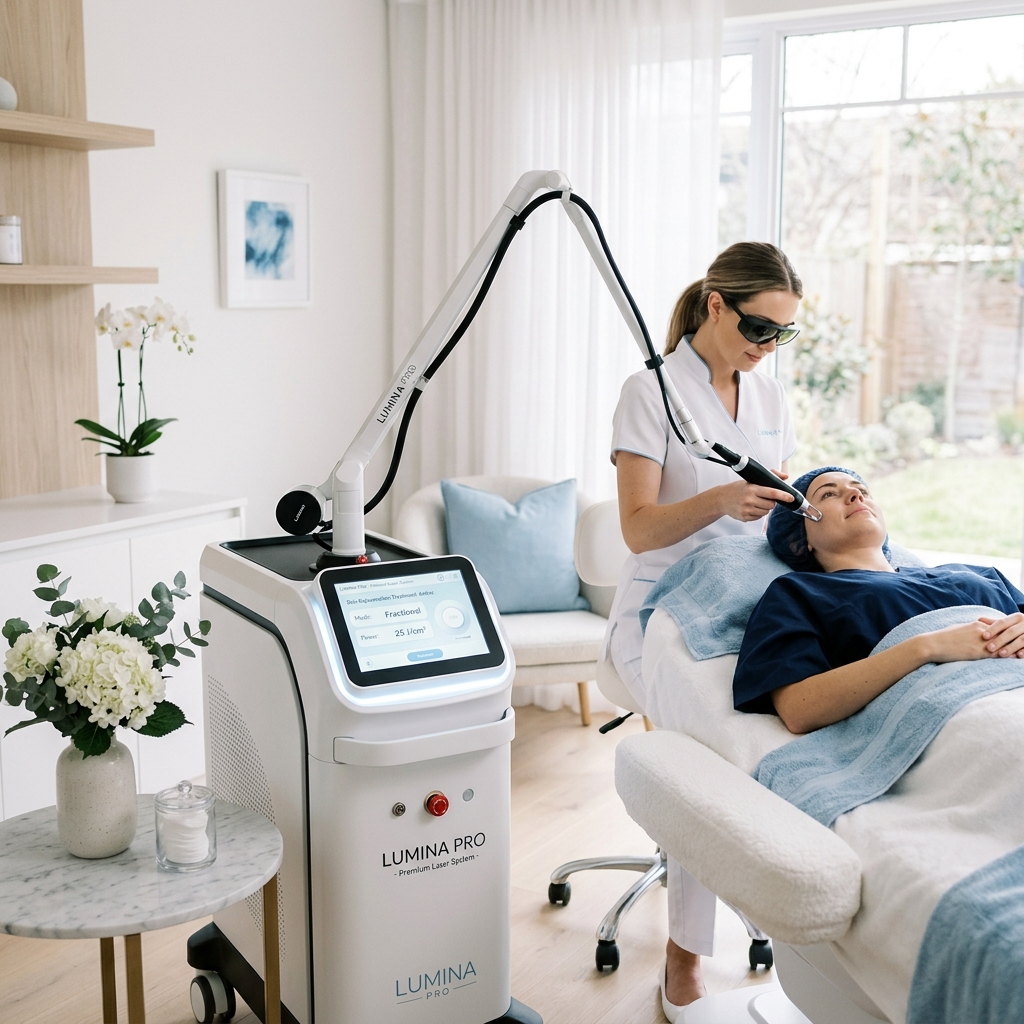
Always verify that selected devices are registered with the Thai Food and Drug Administration (FDA) and have international certifications like CE Marking or FDA Clearance, as this affects safety and clinic licensing.
Step 5 — Register the Business and Plan Taxes Correctly
Choosing the right corporate structure directly affects long-term tax liabilities. Most beauty clinics register as a private limited company to separate personal assets and facilitate bank loans.
Key tax considerations include depreciation of medical devices, VAT management for product sales alongside treatments, and withholding tax for medical and non-medical staff. Consulting an accountant experienced in clinics pre-launch helps avoid difficult long-term issues.
Step 6 — Recruit and Manage Doctors and Staff
The team directly impacts service quality and clinic image, especially when reviews and patient experience drive modern consumer choices.
According to HSS rules, a clinic must have a managing physician with a valid medical license who works during the hours declared to HSS. Part-time doctors are allowed but must fully comply with related rules.
Besides doctors, staff members with direct impact on user experience are nurses or medical assistants, and reception staff, who should be properly trained in both service processes and communication.
Step 7 — Design a Profitable and In-Demand Treatment Menu
A good treatment menu doesn't mean offering everything from day one, but choosing treatments that match your target audience with healthy profit margins.
Highly demanded treatments in Thailand include Botox, fillers, skin lasers, HIFU tightening, body contouring, and acne care. Recurring revenue builders include series-based treatments like hair removal and long-term skin rejuvenation programs.
Step 8 — Plan Digital Marketing Pre-Launch
Marketing planning should start at least 2 months before launch to build awareness and secure pre-bookings.
Key channels for beauty clinics today include Instagram and TikTok for treatment processes and results, Google Business Profile for local searches, and LINE Official Account for communication and bookings.
Note that medical advertising laws dictate that clinic ads must be pre-approved by HSS. Guaranteed results or exaggerated before-after photos are strictly prohibited, with clear legal penalties.
Step 9 — Set KPIs and Track Results in the First 3 Months
Successful clinics track key metrics from start:
- New clients per month — Measuring marketing efficacy.
- Retention rate — Repeat client proportion (should exceed 40%, otherwise review service quality).
- Revenue per visit — Evaluating treatment menu upselling and value.
- Break-even progress — Ensuring the clinic is on track to hit payback targets.
Step 10 — Build a Scalable Foundation from Day One
Scalable clinics succeed through standard operating procedures (SOPs) rather than luck. This covers service flows, staff training, and choosing medical devices with reliable warranties and after-sales service.
For multi-branch expansion, maintaining service standards is what patients expect. Choosing long-term partners and reliable devices is key to this foundation.
Beauty Clinic Budget — How Much Do You Really Need?
General budget figures are often underestimated because they don't include hidden costs. A more comprehensive estimate is:
| Clinic Size | Area | Total Investment (Approximate) | Payback Period (Approximate) |
|---|---|---|---|
| Small (1–2 Treatment Rooms) | 60–80 sq.m. | 1.5–2.5 Million Baht | 18–30 Months |
| Mid-size (3–4 Treatment Rooms) | 100–150 sq.m. | 3–6 Million Baht | 24–36 Months |
| Premium (5+ Treatment Rooms) | 200+ sq.m. | 7–15 Million Baht | 36–60 Months |
* Reference figures for clinics in Bangkok and major cities. Upcountry clinics may reduce investment by 20–35%. Detailed financial plans are advised before making investment decisions.
Frequently Asked Questions (FAQ)
Q: Do you need to be a doctor to open a beauty clinic?
Under the Sanatorium Act B.E. 2541, the owner does not need to be a doctor, but the clinic must have a managing physician with a valid medical license working according to HSS rules.
Q: What is the minimum budget to open a beauty clinic?
For small rural clinics, the minimum budget is about 1–1.5 Million Baht. However, for a varied treatment menu and quality devices, a budget of 2 Million Baht or more is recommended.
Q: How long does a beauty clinic take to break even?
It depends on location, size, menu, and cost management. Typically, a well-planned, well-located medium clinic breaks even within 2–3 years.
Q: What devices should a new clinic consider first?
Depending on treatments and target clients, versatile laser machines, HIFU for tightening, and body contouring devices generally build steady, recurring revenue best.
Q: What licenses are required to open a beauty clinic?
The two main licenses from HSS are a license to operate a sanatorium and a license to manage a sanatorium. All medical staff must also hold active professional licenses.
Summary
A successful, sustainable beauty clinic does not come from investing the most money, but from comprehensive planning and data-backed decisions from the start. These 10 steps are interconnected; skipping one often causes issues in the next.
A critical decision is choosing the right medical devices and a supplier who supports you both before and after sales. For free consultations on medical devices for new clinics, the Inspire Eternity team is here to help.
Interested in opening a beauty clinic or consulting on medical devices?
Our team of experts at Inspire Eternity is ready to support you at every step of your investment with comprehensive guidance.
Contact UsReferences
- * Grand View Research. Thailand Aesthetic Medicine Market Size, Share & Trends Analysis Report, 2024–2030. grandviewresearch.com
- ** Data Bridge Market Research. Thailand Medical Aesthetics Market — Size, Share & Forecast to 2032. databridgemarketresearch.com
- *** Grand View Research. Thailand Aesthetic Devices Market Size, Share & Trends Analysis Report, 2025–2033. grandviewresearch.com