

Introduction
Medical aesthetic equipment represents a substantial multi-million Baht capital investment. Yet many clinic owners overlook a critical reality: choosing who you buy from is just as crucial as choosing what device you buy. Even the world's most advanced technology becomes a financial liability if the distributor lacks legitimate Thai FDA licensing, maintains no domestic engineering team, or disappears after closing the deal.
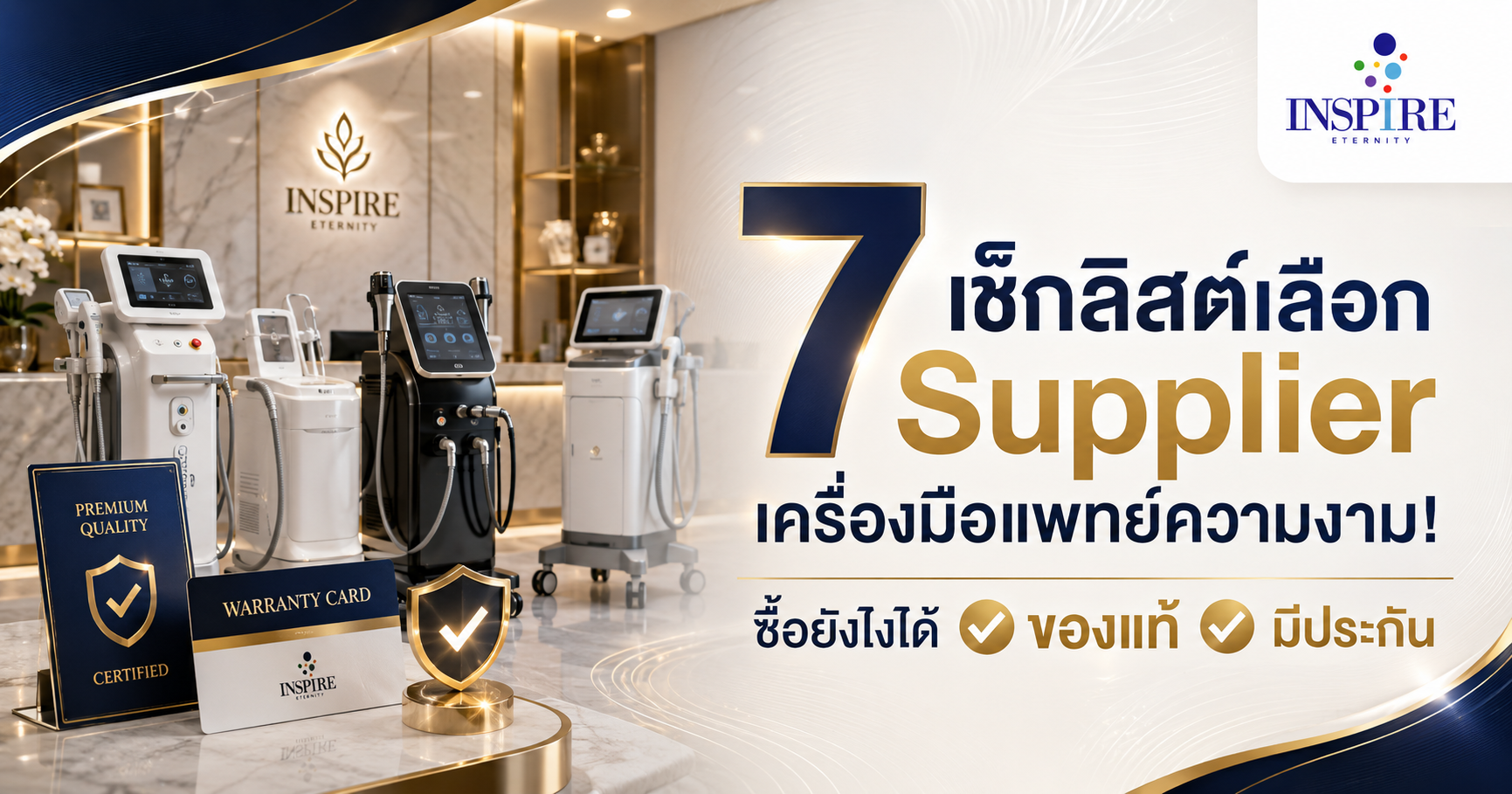
This guide details 7 essential criteria to evaluate medical device distributors across legal credentials, engineering support, training rigor, and long-term viability.
Why Distributor Selection Directly Affects Your Clinic's Bottom Line
The risks associated with unreliable suppliers persist throughout the machine's entire operational lifecycle:
- Extended Equipment Downtime: When a device breaks down without local repair capacity, weeks of lost appointments erode revenue and client confidence.
- Licensing Obstacles: Devices lacking authentic Thai FDA documentation jeopardize the clinic's formal health facility licensing (Sanatorium Act compliance).
- Substandard Clinical Training: Inadequate onboarding leads to suboptimal treatment results or elevated risk of adverse clinical reactions.
- Hidden Consumable Markups: Unclear per-session cartridge and tip costs skew your unit economics permanently.
7 Essential Criteria for Evaluating a Medical Device Distributor
1. Authentic Thai FDA (Food and Drug Administration) Certification
Under Thai law, entities importing and distributing medical devices must hold certified establishment licenses and medical device import registrations issued by the Medical Device Control Division of the Thai FDA.*
- * Reference: Medical Device Control Division, Food and Drug Administration of Thailand.
Verification Action: Request the official Thai FDA registration numbers for both the vendor and the specific machine model. Reputable distributors readily provide verifiable documentation.
2. International Quality Accreditations (CE Mark / US FDA)
Beyond domestic approvals, verify that equipment carries recognized international safety certifications such as the European CE Medical Device Regulation (CE MDR) or United States FDA 510(k) clearance, confirming rigorous clinical safety trials.
⚠️ Caution: The aesthetic market contains illicit clones and uncertified machines. Always verify original manufacturer certificates rather than relying solely on promotional brochures.
3. Dedicated In-Country Engineering & Technical Support
Precision aesthetic devices require immediate technical responsiveness. Sending devices abroad for repair results in weeks of lost operational capacity.
Questions to Ask Vendors: How many full-time biomedical engineers are based in Thailand? What is the guaranteed response time SLA (Service Level Agreement)? Is there an emergency technical hotline?
4. Comprehensive Physician & Staff Clinical Training
High-caliber training extends far beyond basic power-on instructions. It should encompass underlying biophysical mechanisms, patient candidacy assessment, energy setting optimization, and contraindication protocols.
- Structured clinical curriculum with hands-on practice.
- Ongoing clinical support when new nurses or operators join your team.
- Periodic refresher workshops and clinical protocol updates.
5. Transparent Warranty Coverage and Local Spare Parts Inventory
Thoroughly examine warranty terms (parts vs. labor coverage). Ensure the distributor maintains an active spare parts warehouse in Thailand so component replacements occur within 24–48 hours rather than waiting for international air freight.
6. Upfront Transparency on Consumable Costs
Certain aesthetic devices require proprietary single-use cartridges, treatment tips, or contact gels. A reputable distributor provides explicit per-session consumable cost calculations before purchase so your treatment margin forecasting remains rock solid.
7. Established Market Track Record and Long-Term Stability
Because medical devices operate over 5–10 year lifecycles, partner with distributors possessing verified financial stability and established relationships with reputable clinics nationwide.
Red Flags: Warning Signs When Evaluating Suppliers
- Inability to immediately produce official Thai FDA registration certificates upon inquiry.
- Prices unrealistically below market averages without plausible rationale (often indicative of grey-market or counterfeit units).
- No verifiable physical office or engineering lab in Thailand (operating solely through online messaging).
- Aggressive high-pressure sales tactics offering "one-day-only" discounts to discourage thorough due diligence.
- Refusal to provide reference contacts from established clinic clients.
- Vague or evasive answers regarding long-term consumable replenishment costs.
Step-by-Step Distributor Audit Checklist
| Step | Action Item |
|---|---|
| 1. Document Request | Request Thai FDA certificates, ISO certifications, and manufacturer distribution agreements. |
| 2. Regulatory Verification | Cross-reference registration numbers directly via the Thai FDA medical device portal. |
| 3. Technical Audit | Interview the engineering team regarding domestic repair turnaround times and spare parts availability. |
| 4. Peer References | Connect with existing clinic clients to verify after-sales service reliability in real practice. |
| 5. Warranty Terms Review | Examine contract clauses regarding loaner machines during major repairs and coverage scope. |
| 6. Consumable Financial Modeling | Calculate exact per-treatment cartridge costs into your financial P&L model. |
Frequently Asked Questions (FAQ)
Q: Can a clinic import medical devices directly from overseas manufacturers?
Under Thai healthcare regulations, importing medical devices requires specific commercial import licenses issued by the Thai FDA. Direct personal importation risks customs seizure and renders the clinic ineligible for domestic facility licensing.
Q: Should we choose a multi-brand distributor or a single-brand exclusive distributor?
Multi-brand distributors provide objective technology comparisons across multiple clinical categories, whereas single-brand distributors offer deep manufacturer-specific specialization. Focus on service SLA responsiveness and verified customer satisfaction.
Conclusion
Selecting the right medical aesthetic device distributor is an investment in your clinic's long-term peace of mind. A trustworthy partner backed by verified FDA licenses, prompt local engineering, and transparent economics ensures your capital investment delivers dependable returns year after year.
If you are evaluating medical aesthetic devices and wish to inspect certified FDA documentation or after-sales service SLA details, the Inspire Eternity team is available to assist without obligation.
References
- * Medical Device Control Division, Food and Drug Administration of Thailand. Medical Device Import and Distribution Regulations. medical.fda.moph.go.th
Planning to Open an Aesthetic Clinic or Seeking Equipment Feasibility Consultation?
The Inspire Eternity specialist team is ready to guide your medical device procurement and investment roadmap.
Contact Us Today